
Structured Bilbao Itineraries: Architecture and History
Navigating a city as dense with design history as Bilbao requires a clear plan. We have curated several daily routes that focus on different eras of the city's development, from medieval stone to titanium cantilevers.
The Guggenheim Protocol: Timing and Access
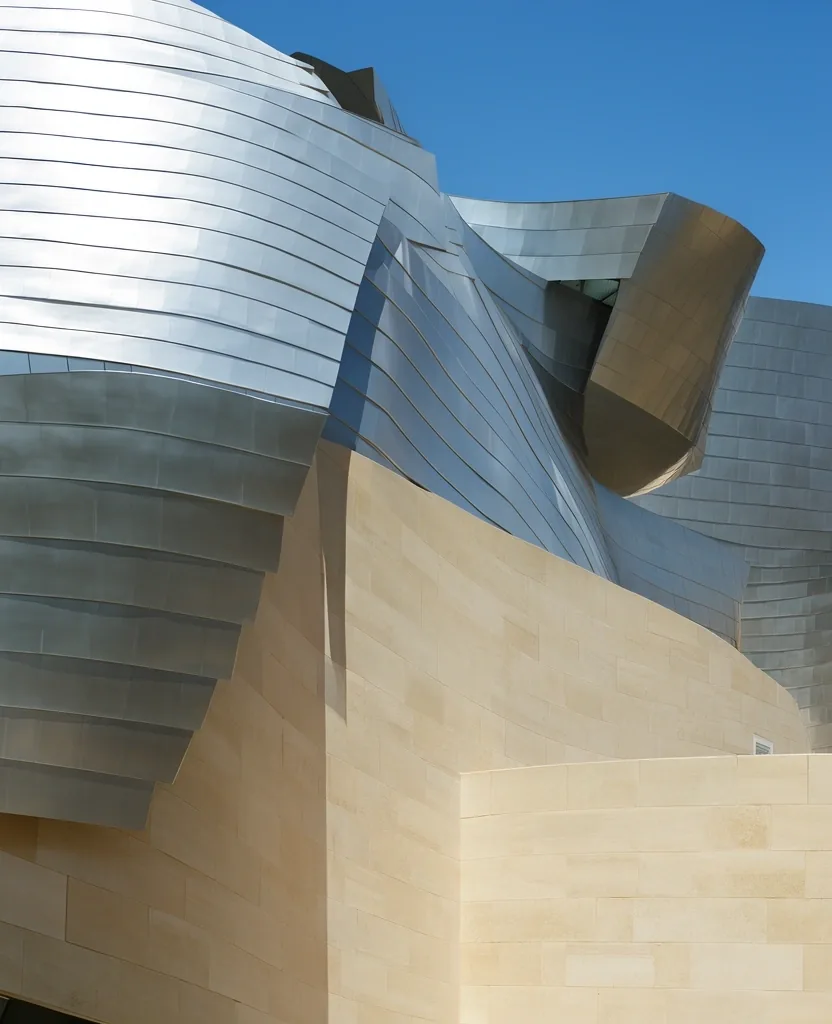
For many visitors, the Frank Gehry-designed masterpiece is the primary anchor of their Bilbao itinerary. To truly appreciate the interplay of glass, limestone, and titanium, one must plan for the museum's specific visitor flow. A key Guggenheim skip the line strategy involves utilizing the official timed-entry windows. By arriving during the first morning slot at 10:00 or opting for a late afternoon visit after 16:30, you bypass the peak congestion of midday group tours.
Understanding the museum's internal logic is as vital as observing its exterior. The atrium, a soaring 55-meter space, acts as the circulatory heart of the building. We recommend spending at least three hours here, moving from the large-scale installations on the ground floor to the more intimate galleries upstairs, where the light shifts across the curved surfaces throughout the day.
Strictly adhering to the museum's official entry policies—rather than seeking third-party resellers—ensures that your access is guaranteed and supports the institution's architectural preservation efforts. Mid-week visits, specifically Tuesday and Wednesday, offer the quietest atmosphere for studying the building's complex structural engineering.
The Modernist Riverfront
01. Morning: The Guggenheim and Beyond
Begin your exploration at the Guggenheim, dedicating your morning to both the interior exhibitions and the exterior sculptures, such as Jeff Koons' "Puppy" and Louise Bourgeois' "Maman." The titanium skin of the museum changes color depending on the cloud cover, offering a dynamic study in material science.
02. Midday: Abandoibarra Promenade
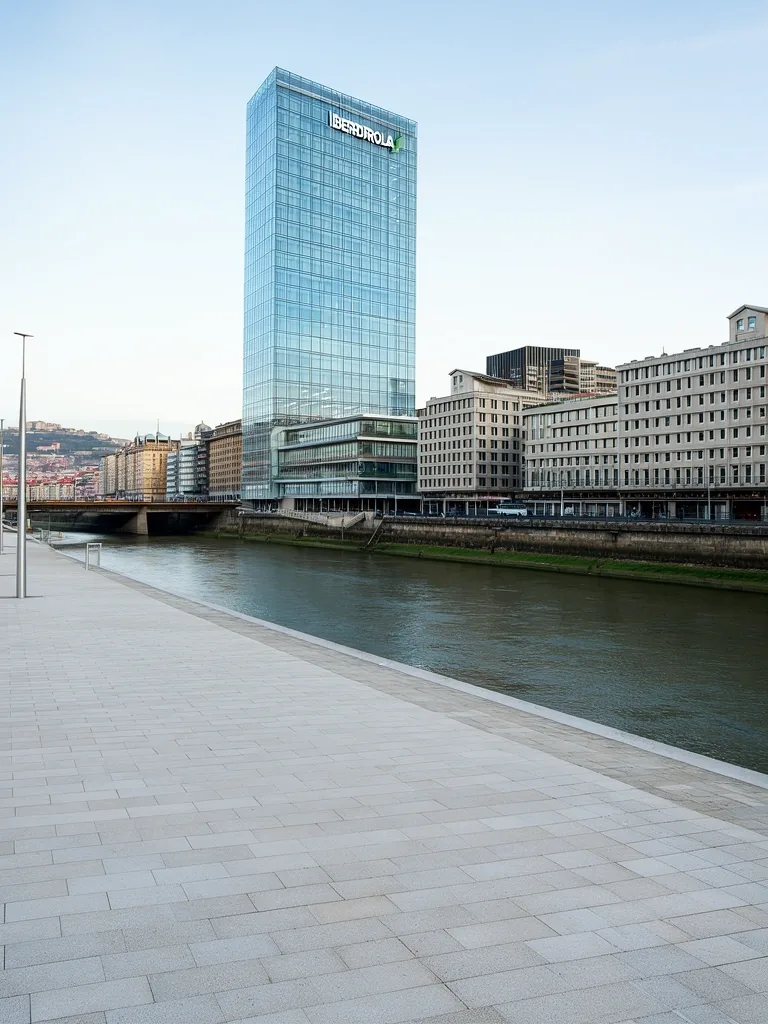
Walk along the river towards the maritime museum. You will pass the Iberdrola Tower, designed by César Pelli, a glass obelisk that anchors the new business district. Adjacent is the University of Deusto Library by Rafael Moneo, a masterpiece of translucent glass blocks that glow with a soft, diffused light.
03. Afternoon: The Calatrava Bridge
Cross the Nervión via the Zubizuri (White Bridge). Santiago Calatrava’s parabolic arch and glass-tiled deck provide a striking modernist silhouette against the older façades of the Uribitarte area. Note the rhythmic repetition of the steel cables, a signature of the architect’s structural language.
04. Sunset: Artxanda Funicular
Take the historic funicular up to Mount Artxanda. From the summit, the entire urban layout of Bilbao is visible, allowing you to trace the path of the river and the precise interventions of the 1990s revitalization plan that transformed the city from an industrial hub to a design capital.
From Medieval Stone to Global Modernism.
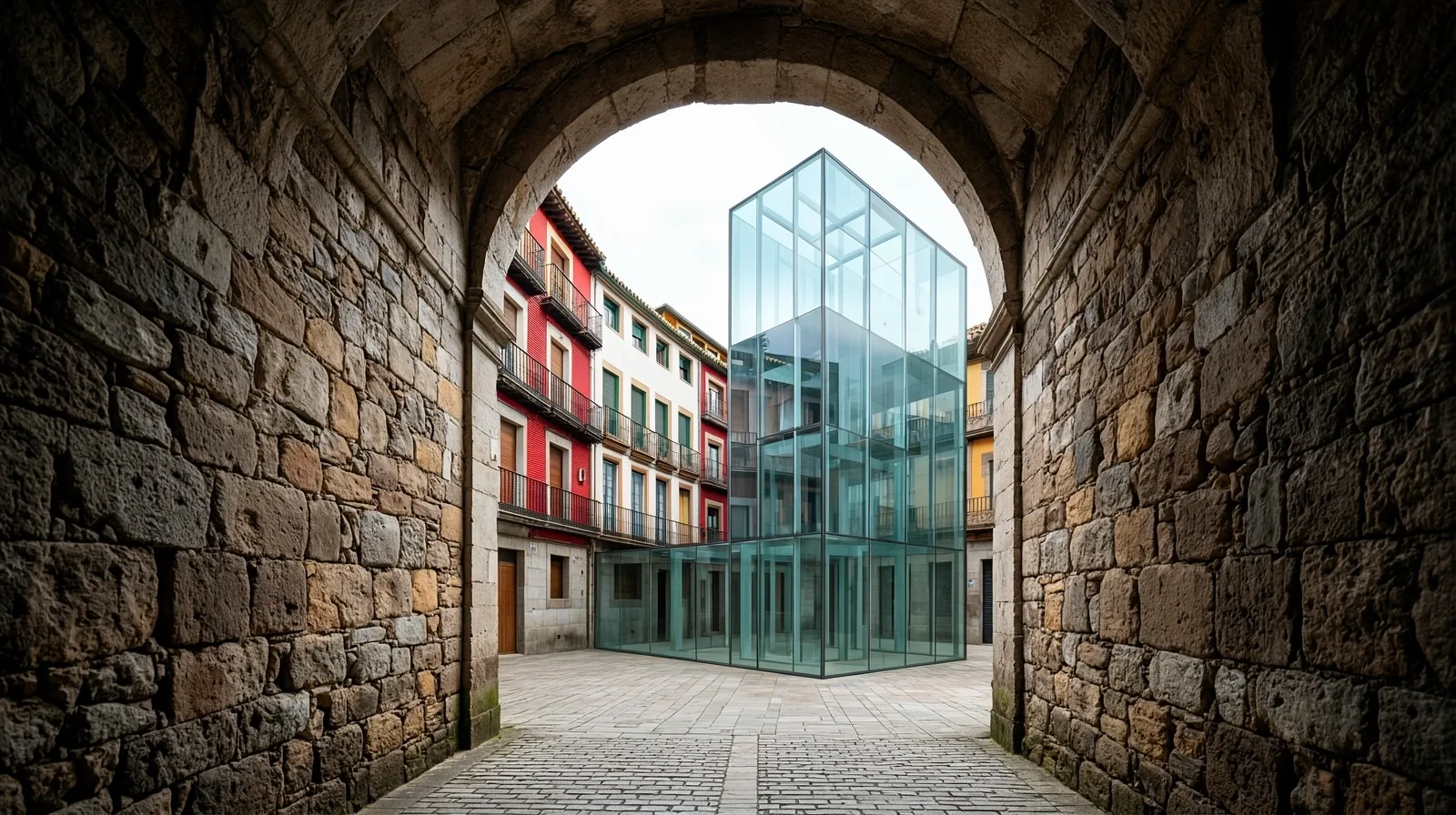
Bilbao’s strength lies in its refusal to abandon its past. As you transition from the riverfront to the historic core, observe how 19th-century eclecticism paves the way for the contemporary Basque identity.
Architectural Highlight: Azkuna Zentroa
Redesigned by Philippe Starck, this former wine warehouse is a masterclass in interior urbanism. The central atrium is supported by 43 distinct columns, each a sculptural work representing different cultures and architectural styles—from Chinese porcelain to neoclassical marble.
The Historic Core and the Ensanche
Morning in Casco Viejo
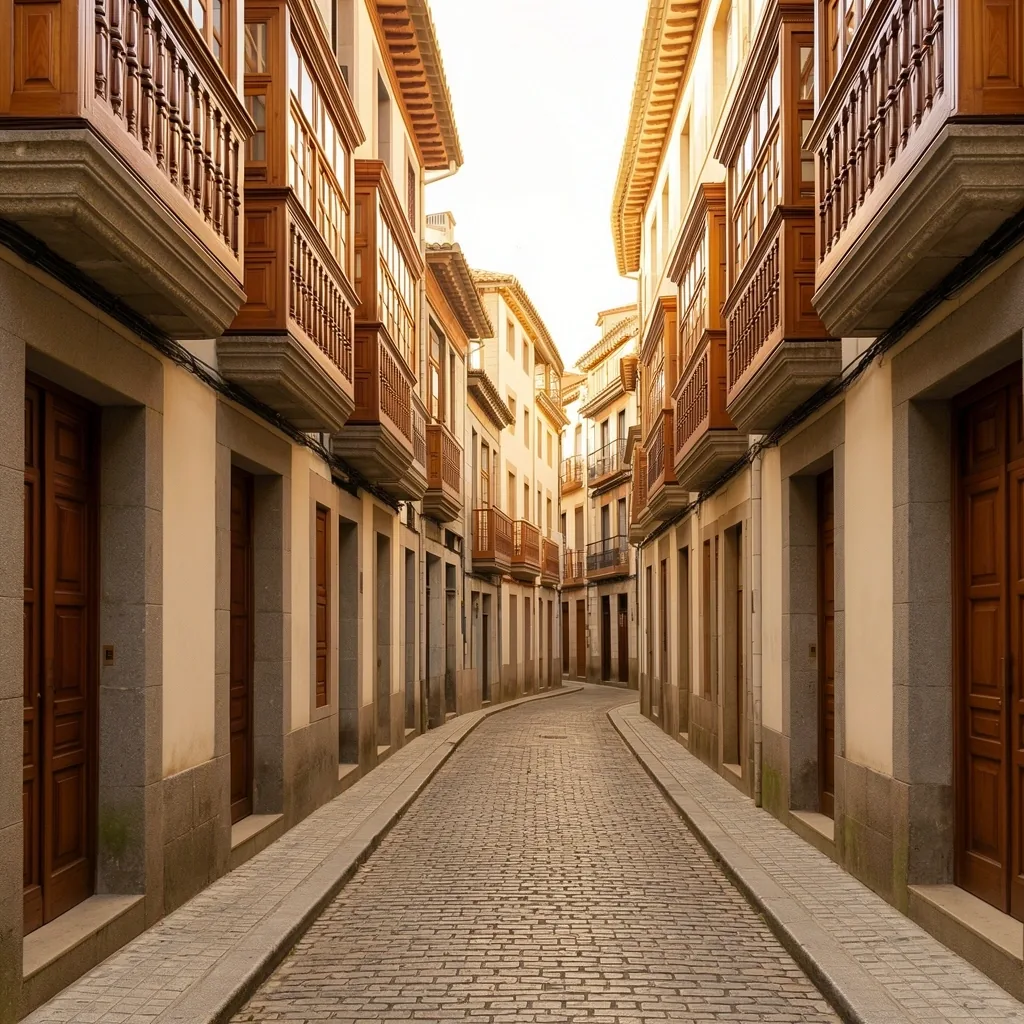
Begin in the Siete Calles (Seven Streets), the medieval heart of the city. Visit the Cathedral of Santiago, a fine example of Basque Gothic architecture, and the Teatro Arriaga. The theater, inspired by the Paris Opera House, features a Neo-Baroque façade that stands as a testament to the city's 19th-century prosperity.
Lunch at Plaza Nueva
The Neoclassical Plaza Nueva is the social hub of the Old Town. Surrounded by arched galleries, it is the perfect place to pause and observe the rhythm of local life before crossing the Arenal Bridge into the 19th-century Ensanche district.
The Expansion: Ensanche
This district is where Bilbao’s bourgeoisie showcased their wealth during the industrial boom. The architecture here is eclectic, blending Art Nouveau, Neoclassical, and Modernist styles. The Gran Vía is the primary artery, lined with ornate stone buildings that reflect a period of immense urban growth and confidence.
Off-the-Beaten-Path: The Industrial Fringe
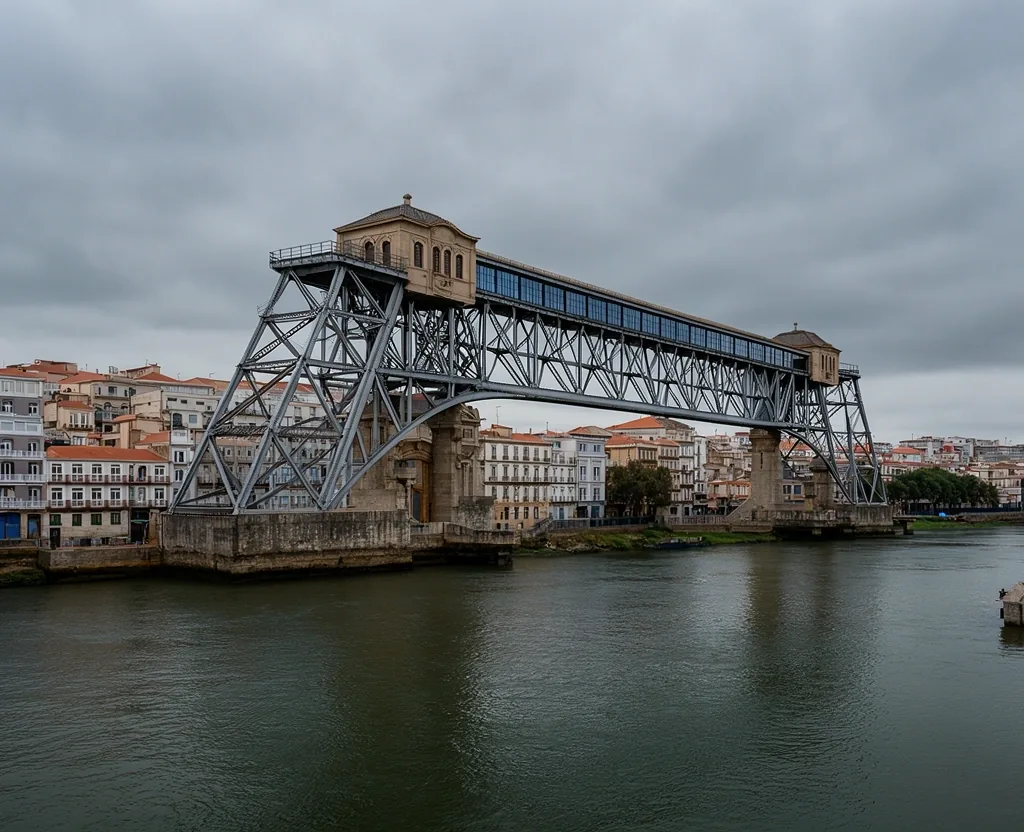
For those interested in the raw history of the region, take the Metro to Portugalete to witness the Vizcaya Bridge. This iron transporter bridge, a UNESCO World Heritage site, is a functional monument to the Industrial Revolution. Walking across its high walkway offers a view of the estuary and the industrial heritage that still defines the region.
Vizcaya Bridge (Puente Colgante)
A masterwork of Alberto Palacio, a disciple of Gustave Eiffel.
Zorrotzaurre Peninsula
Future "island" district based on a master plan by Zaha Hadid.
Plan Your Professional Architectural Tour.
Experience the evolution of Spanish design through our expert-led itineraries.
Location
Calle de la Princesa, 25, 3ºB
28008 Madrid, Spain
Communications
[email protected]
+34 612 345 678
Identity
bilbaoguide.site
© 2026 Bilbao Guide