
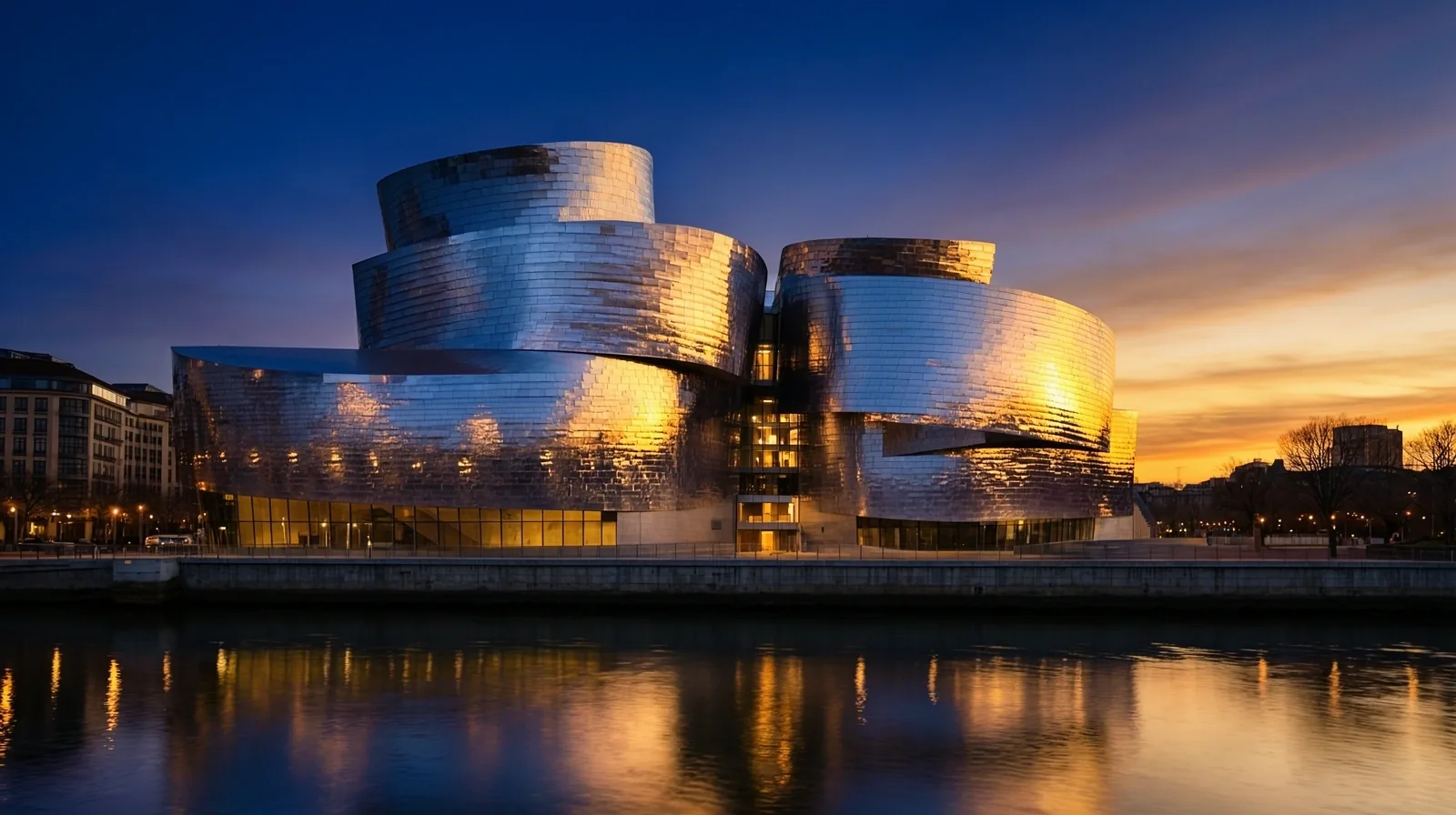
Guggenheim Bilbao: An Architectural Analysis of Frank Gehry's Masterpiece
A radical departure from traditional museum design, the building utilized aerospace software to calculate the complex curves of its titanium exterior, transforming an industrial port into a global design capital.
Materiality: Titanium, Limestone, and Glass
Frank Gehry’s selection of titanium for the exterior was a deliberate response to the specific atmospheric conditions of the Basque Country. Unlike stainless steel, which can appear harsh or clinical under the frequent gray skies of Bilbao, titanium possesses a soft, organic texture. It reacts dynamically to the shifting light, appearing golden in the morning, brilliant silver at midday, and a muted, pearlescent blue as evening approaches.
The structure consists of approximately 33,000 thin metal plates, each anchored to a complex steel frame. These plates are purposefully thin—just half a millimeter—allowing them to flutter slightly in the wind, a phenomenon Gehry embraced to enhance the "fish scale" effect. This shimmering metallic skin is anchored by solid volumes of Spanish limestone, quarried from Granada, providing a grounding, tectonic contrast to the fluid, weightless appearance of the metal.
Massive glass curtain walls serve as the third primary material, designed not just for illumination but to create a visual continuity between the interior galleries and the riverfront. These transparent planes are treated with a specialized coating to protect the artworks from ultraviolet radiation while maintaining clear vistas of the surrounding mountains.
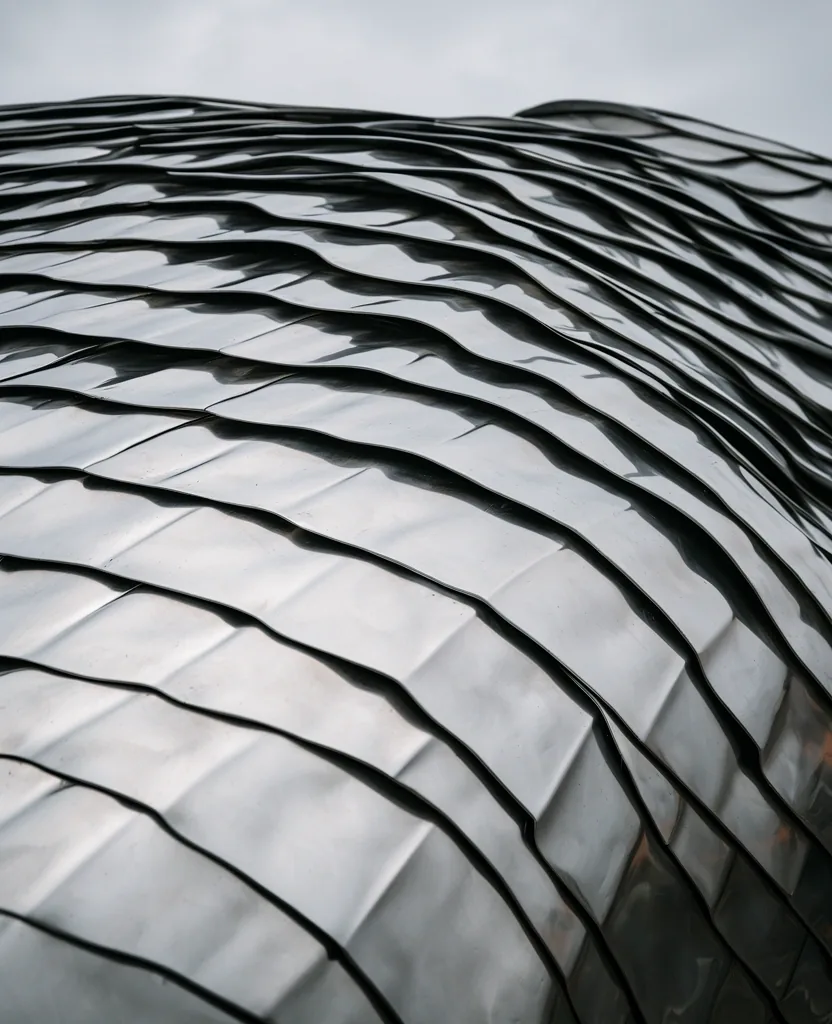
Surface Detail: 0.5mm Titanium Plates
The Atrium: The Central Hub of a Radial Design
Verticality
The museum revolves around a soaring, 50-meter-high atrium, flooded with light from curved glass ceilings. This space functions as the building's central lung.
Connectivity
Curved walkways and glass elevators connect three levels of galleries. Gehry envisioned the atrium as the "flower," with galleries radiating outward like petals.
Orientation
The central hall is visible from most transition points, ensuring that visitors never feel lost within the complex geometry of the nineteen distinct galleries.
Strategies for a Streamlined Visit
As a central pillar of any Bilbao itinerary, the museum draws significant crowds. Use these logistical insights to experience the architecture with clarity.
The Early Entrance Advantage
To maximize your time, arriving 15 minutes before the 10:00 AM opening time is the most effective way to enter before the large tour groups descend. This provides a 45-minute window of relative quiet in the main atrium.
Optimal Weekday Planning
Statistically, the museum often has lower attendance on Tuesday and Wednesday mornings. Avoiding the weekend rush allows for a better "Guggenheim skip the line" experience by reducing the queue depth at the security checkpoint.
Sequence of Exploration
Move directly to the larger installations, such as Richard Serra's "The Matter of Time," located on the ground floor. This massive installation can take up to an hour to fully explore and is best experienced before the midday congestion.
Educational Pre-Orientation
Reviewing the floor plan before arrival allows you to bypass the initial orientation crowd in the atrium. Focus on the third floor for permanent collections if you wish to see the building's interaction with natural light first.
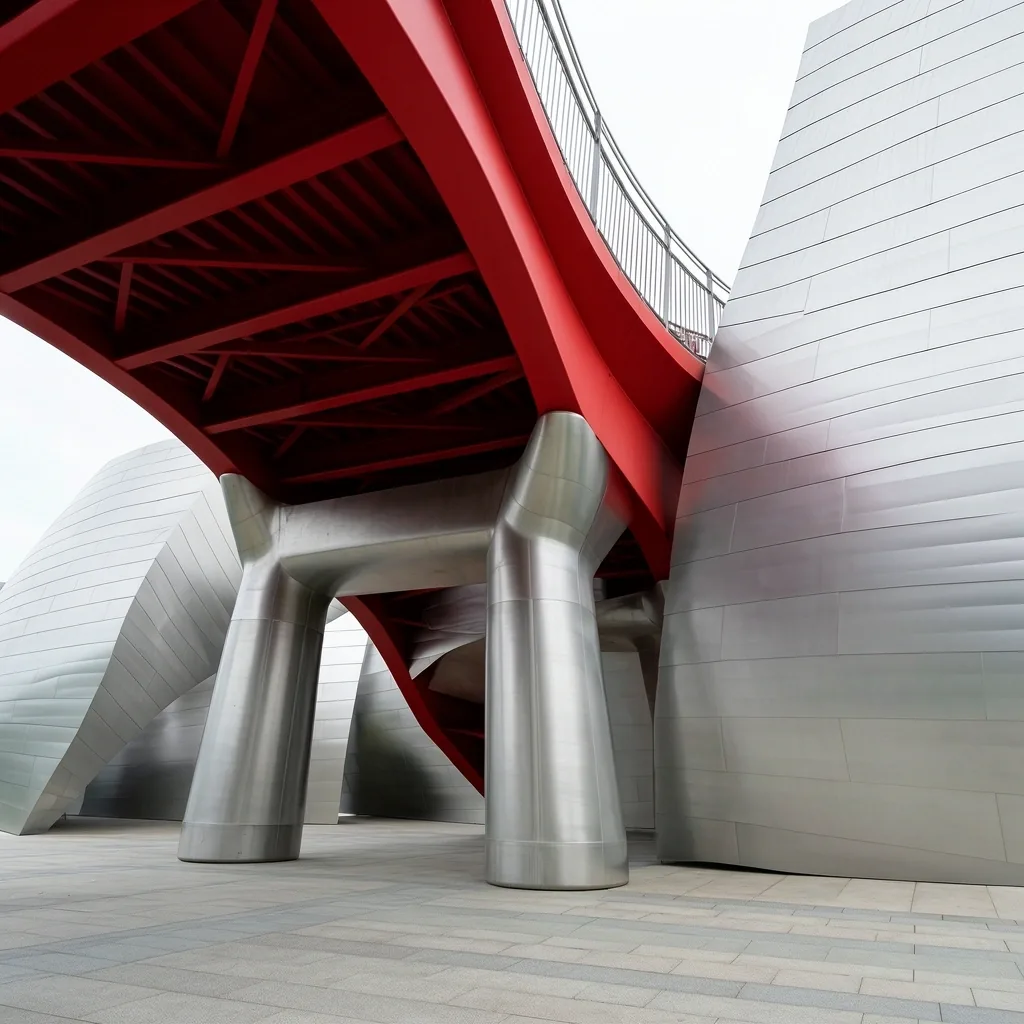
Urban Integration: The Salve Bridge
The Guggenheim was not designed as an isolated object, but as a structure that integrates with the city's existing infrastructure. One of its most daring features is the way it wraps around the Salve Bridge. Instead of treating the bridge as an obstacle, Gehry incorporated it into the museum’s volume, creating a tower that appears to pierce through the bridge’s roadway.
This interaction creates a unique urban perspective. Pedestrians walking across the bridge look down directly onto the roof sculptures, including the floral sculpture "Puppy" by Jeff Koons. This "Bilbao travel guide" highlight serves as a reminder that contemporary architecture can act as a bridge between a city’s industrial past and its artistic future.
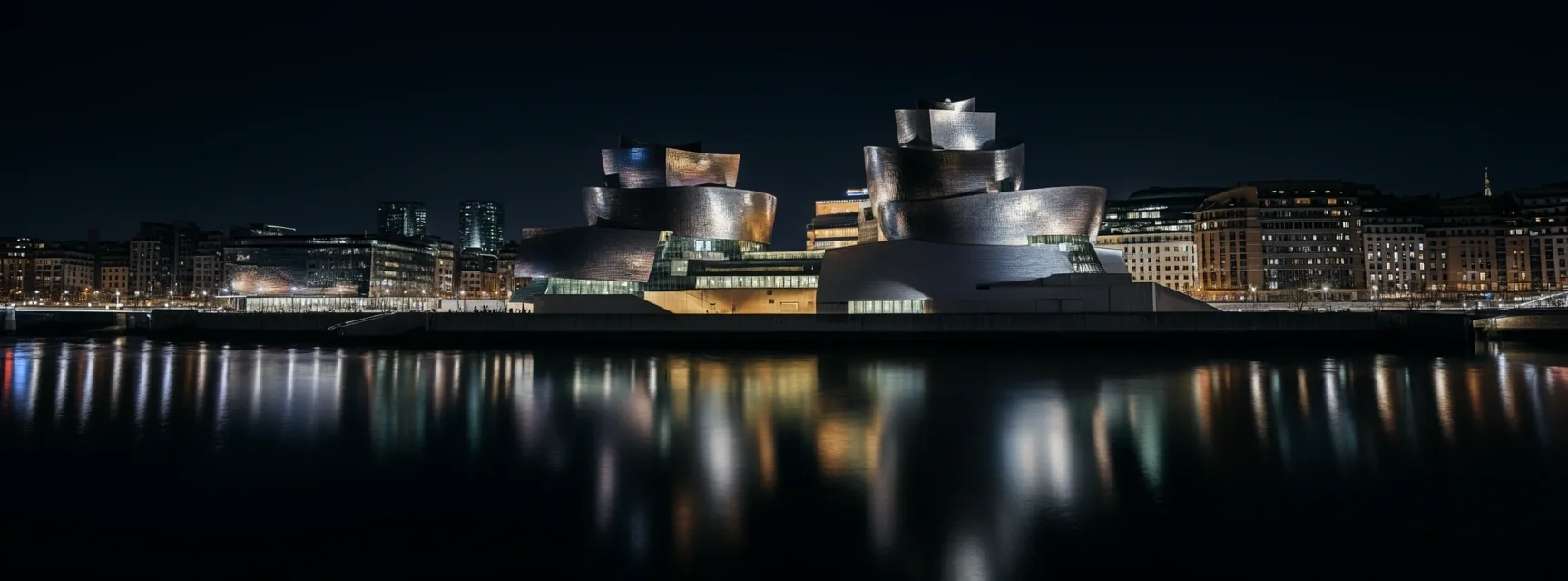
Refining Your Architectural Perspective
Understanding the Guggenheim requires both a distant view of its urban impact and a close study of its material innovation. Plan your visit to witness the intersection of aerospace engineering and cultural heritage.