
A Chronology of Spanish Architecture: From Antiquity to Modernism
Spanish architecture is a physical record of the many civilizations that have inhabited the Iberian Peninsula. This overview traces the major shifts in style that paved the way for the contemporary designs seen in cities like Bilbao today.
The Roman and Visigothic Foundation
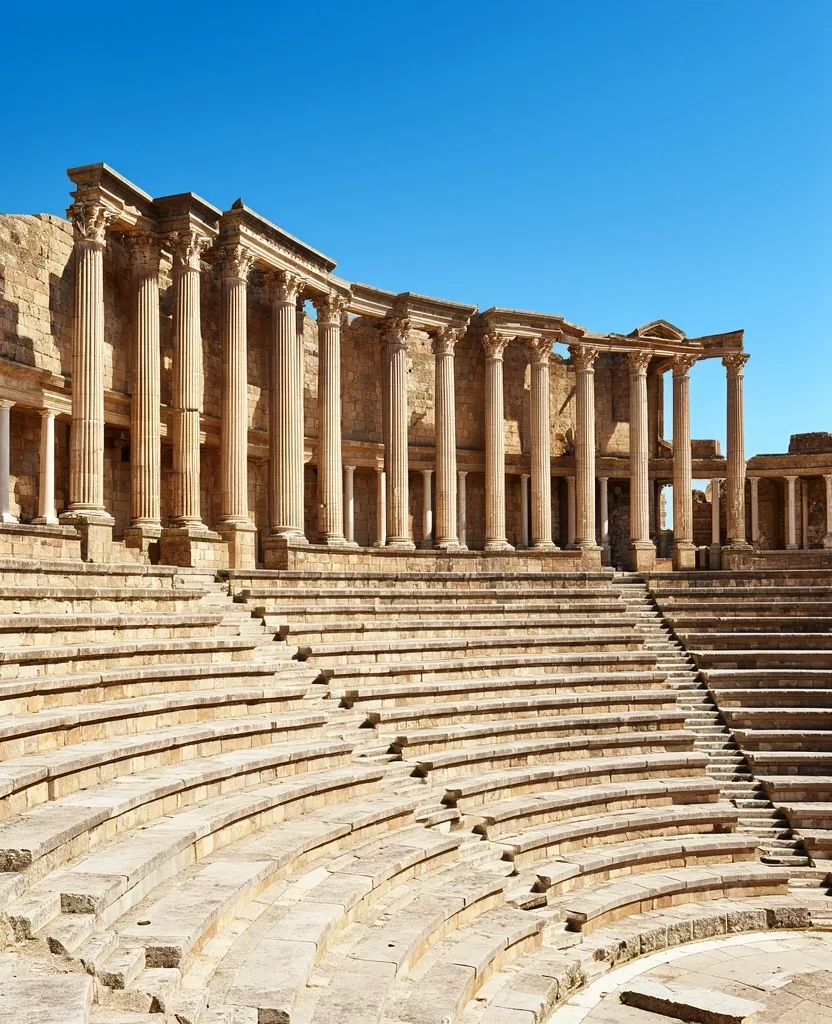
The Romans left an indelible mark on Spain, most notably with the Aqueduct of Segovia and the Roman Theater in Mérida. These structures emphasized durability and public utility, utilizing massive ashlar masonry that has survived two millennia. The engineering feats of the Roman Empire established the use of heavy stone and the concept of central public squares—the forum—that remain central to Spanish urban life.
Following the Romans, the Visigoths introduced the horseshoe arch, a feature that would later be refined and popularized during the Islamic period. While their structures were often smaller and more fortress-like, they maintained a continuity of stonecraft that bridged the gap between the classical era and the Middle Ages.
Great Mosque of Córdoba
The hypostyle hall with its double-tiered arches remains a pinnacle of early Islamic engineering.
Mudéjar Synthesis
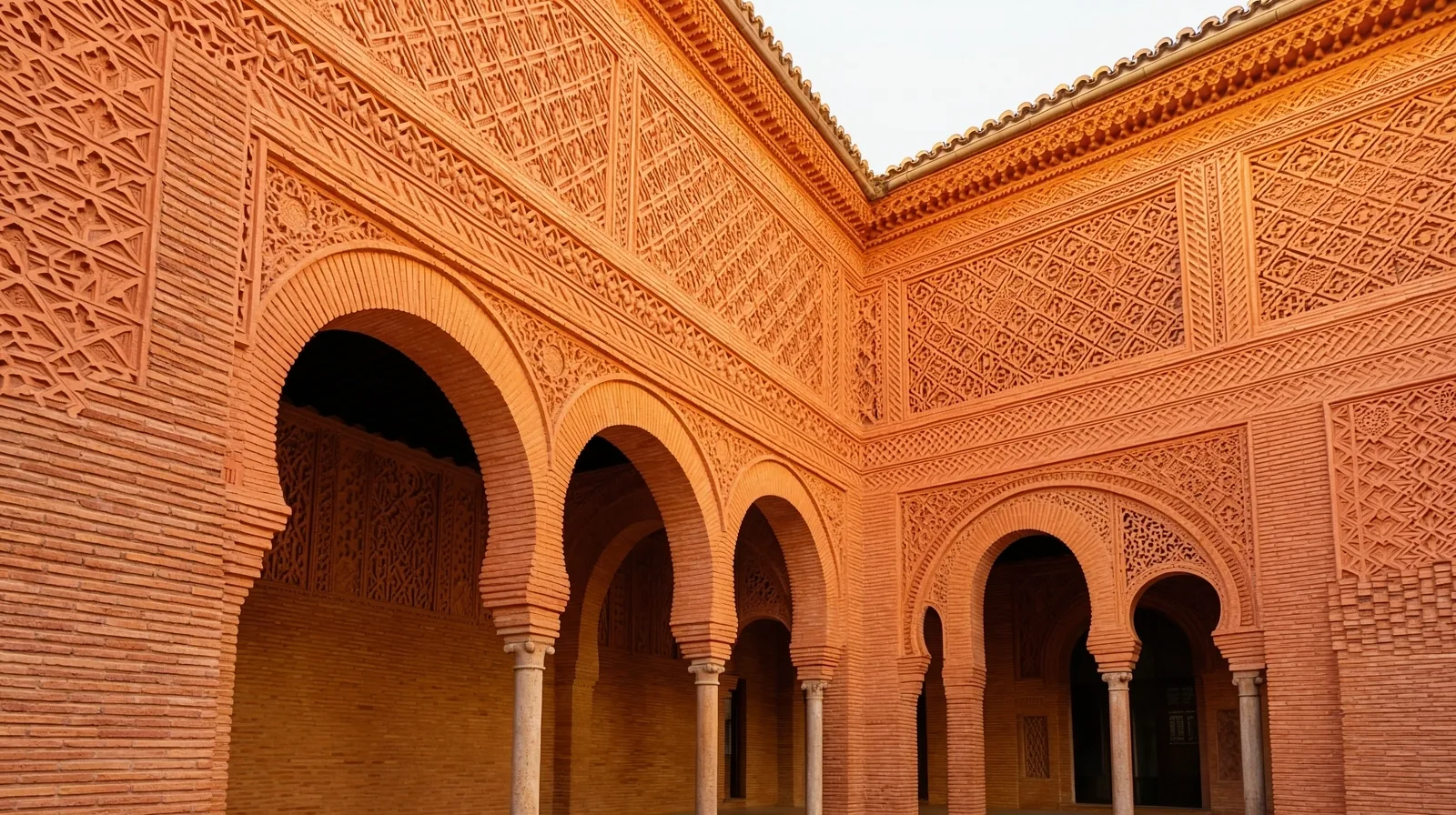
Christian builders adopting Islamic brickwork, geometric tiling, and wooden ceilings.
The Islamic Influence and Mudéjar Style
The period of Al-Andalus brought sophisticated irrigation, garden design, and the intricate brickwork and tiling of Islamic architecture. The Alhambra in Granada represents the zenith of this era, where the geometry of the space is mathematically calculated to inspire awe and reflection.
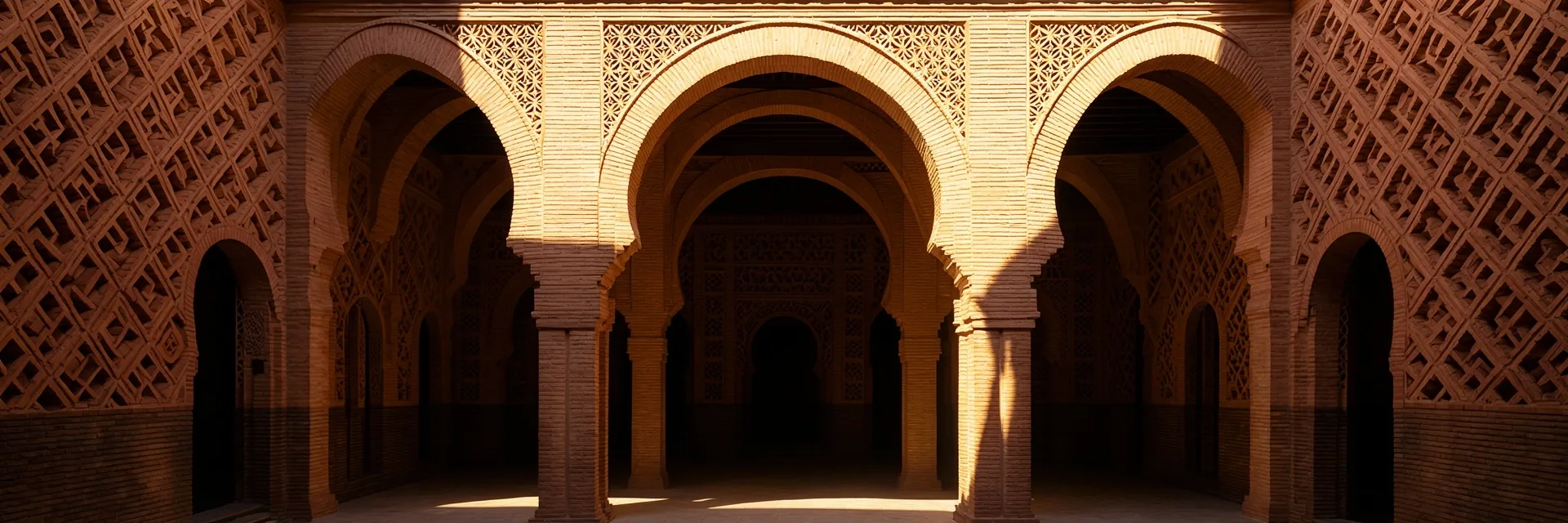
Even after the Reconquista, these styles persisted through Mudéjar architecture. This synthesis is unique to Spain; it represents a rare moment where competing cultural identities merged into a single structural language. You can see this legacy in the brick bell towers of Teruel or the intricate wooden ceilings of the Alcázar in Seville.
Gothic, Renaissance, and the Golden Age
Gothic Verticality
The cathedrals of Burgos and León utilized flying buttresses to create massive, light-filled spaces, trading the heavy walls of the Romanesque for stained glass and skeletal stone frames.
The Plateresque
Named for its resemblance to the work of silversmiths (plateros), this style emerged during the early Renaissance, featuring incredibly detailed carvings that draped over classical proportions.
Imperial Austerity
The El Escorial monastery represents the peak of the Spanish Renaissance. It moved toward a more austere, symmetrical design that reflected the stoic power of the Spanish monarchy.
The Modernist Transition
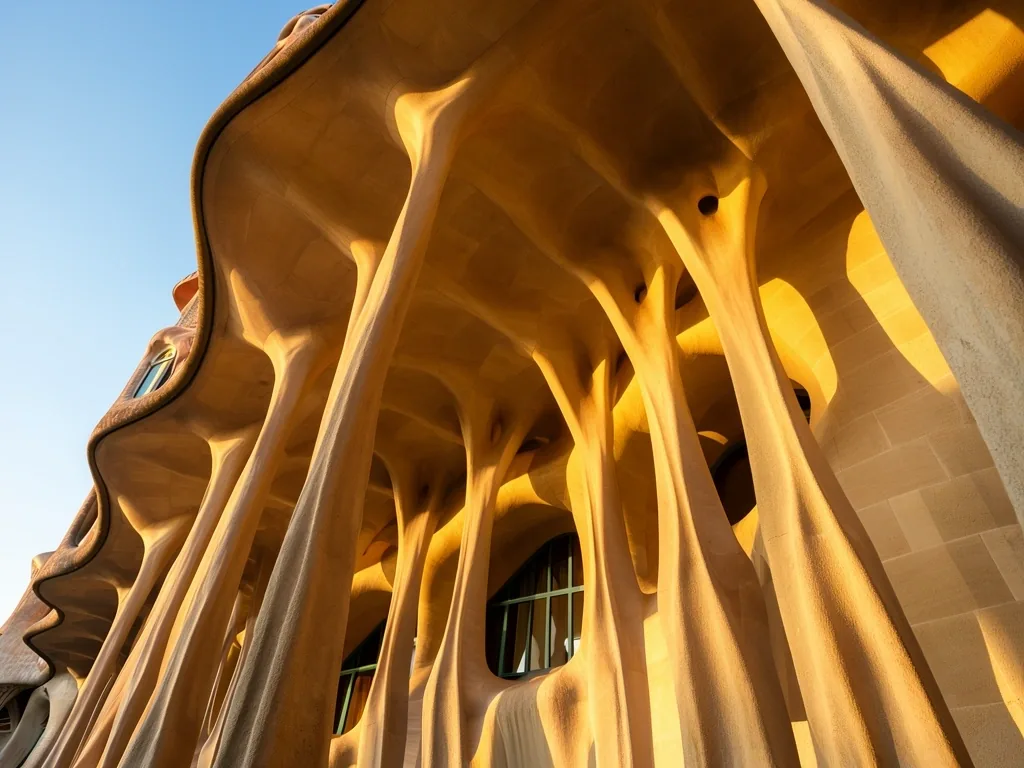
The late 19th century saw the rise of Catalan Modernism, led by Antoni Gaudí. His work broke away from straight lines in favor of organic, naturalistic forms. This experimental spirit set the stage for the 20th-century avant-garde, allowing Spanish architects to blend traditional materials like stone and tile with radical new uses of concrete and steel.
In Bilbao, this evolution culminated in the late 1990s with a radical urban transformation. The integration of modern sculpture and functional architecture has turned the city into a global case study for how design can revitalize industrial heritage.
Guggenheim Skip the Line Strategies
Understanding the architectural layout of the Guggenheim Bilbao is essential for a productive visit. To optimize your experience and minimize wait times, visitors are encouraged to utilize official digital timed entry systems. By securing a specific arrival window through the official museum website before your visit, you can significantly reduce time spent in queues.
We recommend arriving at least 15 minutes before your allocated time slot. Early morning entries—typically the first two hours of operation—offer the best natural lighting for viewing the titanium exterior and the most tranquil environment within the soaring 50-meter atrium.
Continue Your Architectural Study
Our editorial team provides in-depth research for travelers and students of Spanish design. For specific inquiries regarding historical sites or curated itinerary planning, please reach out to our Madrid office.
Calle de la Princesa, 25, 3ºB
28008 Madrid
+34 612 345 678
[email protected]